Stay in Touch

Showing posts with label 470. Show all posts

Friday, February 10, 2012

Family Buy In PE

Beltsville PE uses blogs to communicate with students and parents homework, special dates and even assignments for missed classes. In Prince George's County there are over 25 SUNY Cortland PE alumni - so I'll follow up with them to see if any of this staff did.

I asked them " On a scale of 1-10, how important is it for you to intereact/communicate/educate the parents/guardians & advocating HQPE" and they answered:

"@syangman 10! Getting the family to buy in is a huge step toward creating physically competent and active, healthy kids!"

https://twitter.com/#!/BeltsvillePE/status/167987939052232704

Check them out at:
http://beltsvillepe.blogspot.com/


How will you use technology to aid you in "creating physically competent and active, healthy kids!"


Remember that using tech is part of the Healthy New Year Resolution Video Assignment - which is due Feb. 16th.
201 - 255  - 470


Video Contest page - Go Cortland PE!

Tuesday, January 31, 2012

Healthy New Year Video Challenge - 1st entry

GK's Karagrozis' Physical Fit Lifestyle entry for the Healthy New Year Resolution Submission to US Gov Competition is filled with great apps to track Physical Activity and Nutrition. Will he win some $$$??? Top prize is $2000 with lots of other awards too. Let's see if we can get somebody from SUNY Cortland on this list!  Help spread the word, and use the hashtag #HealthIT4U2012 when you tweet.  

Wednesday, November 30, 2011

Foundations: Multiculturalism, Philosophy, Finances


Focus questions:
1. How do deficit, expectation, and cultural difference theories explain disparate academic performance among various racial, ethnic, and cultural groups?
2. What major developments have marked the educational history of Native Americans, Hispanics, African Americans, Asian Americans/Pacific Islanders, and Arab Americans?
3. What educational barriers and break throughs have girls and women experienced?
4. What classroom strategies are appropriate for teaching culturally diverse learners?
5. Are America's schools a secret success story, doing better than the press and public believe?


1. What is a philosophy of education, and why should it be important to you?
2. How do teacher-centered philosophies of education differ from student-centered philosophies of education?
3. What are some major philosophies of education in the United States today?
4. How are these philosophies reflected in school practices?
5. What are some of the psychological and cultural factors influencing education?
6. What were the contributions of Socrates, Plato, and Aristotle to Western philosophy, and how is their legacy reflected in education today?
7. How do metaphysics, epistemology, ethics, political philosophy, aesthetics, and logic factor into a philosophy of education?


1. Why do teachers need to know about finance and governance?
2. How is the property tax connected to unequal educational funding?
3. What is the distinction between educational equity and educational adequacy?
4. What are the sources of state revenues?
5. How does the federal government influence education?
6. What current trends are shaping educational finance?
7. How do school boards and superintendents manage schools?
8. What is the "hidden" government of schools?
9. How does the business community influence school culture?
10. How are schools being made more responsive to teachers and the community?


1. What are your legal rights and responsibilities as a teacher?
2. What legal rights do students enjoy (and do they have legal responsibilities)?
3. What are today's main approaches to moral education?


Tuesday, October 25, 2011

Rules, Protocols, Expectations

I love catching up with PE teachers all over the world on what they're doing in class. I truly miss the daily interactions in a school setting...but with teachers like Michael Beringer in Minnesota, Jarrod Robinson in Australia, Jenna Monahan (student-teacher) on  Long Island, Kyle McKune (Louisville, KY) and others...its almost like being there.

Check out Michael's Gym rules poster and other weekly highlights including how he plays games like Scat Cat and clump to get students used to directions and grouping along with self-spacing.  You never just play/practice these just once - you constantly remind, practice and give feedback on these expected behaviors.

Sunday, October 9, 2011

Portfolios Portray Professionalism in PE!

Hey everyone, 
There's one thing that you as a phys ed major should be constantly working on throughout your cortland lifetime, and that is your portfolio. Although you still have some time before the finished product is due, there are a few things you should make sure you keep a hold of. You're notebook should be tabbed off into the following sections: resume, philosophy, standards 1-6, certification, and professional development. 
Resume and philosophy (you will do these in EDU 470) is pretty much self explanatory.

Click here to see more information about setting up your paper and electronic portfolios!

In the standards section you will have to have a total of 12 artifacts and reflections total (2 per each standard). Some artifacts that you may already have done are EXS coursework and PED 201 labs, FitnessGram results, personal fitness logs, and athletic performance evidence. You may use these mainly in the first two standards. Some artifacts that you will complete in the near future include EDU 255 scope and sequence charts, lab D analysis form, resource project and EDU 256 bulletin board and host teacher evaluations. Of coarse these are only examples, if you can come up with other artifacts that meet the standard requirements go right ahead, the more unique the better.


The certification section of your notebook should include field experience log, portion of your ESL experience, fingerprinting, unofficial transcript, and certification exams. The Professional Development section should include your references, certifications, conference attendance, professional memberships, and awards. Once again these are just suggestions.

I know this may seem like a lot right now, but just take it all in stride. You still have lots of time and it will all come together wonderfully! One last hint- make sure you make your own personal copies of your field experience logs and host teacher evaluations (when you receive them). Cortland will end up keeping them and then you will not be able to have a copy for your portfolio. If anyone has any questions, don't hesitate to ask. GO PE!

Monday, October 3, 2011

Never Stop Improving

Should this be our new education slogan....???

What have you committed to improving in terms of your education and growth?

How have you sought out ways to be a better communicator, leader, visionary?


Be sure to watch Ken Robinson's famous talk on how schools are killing creativity and Matt Cutts on trying something new for 30 days.


Monday, September 12, 2011

Teaching and You. Decision or Vocation?

I've often heard student's decisions to entering the teaching profession and it has always made me really wonder why they "want" to become a teacher.  Let's discuss our influences and the forces that are rapidly changing the education landscape regionally, nationally, and internationally.
Here is the link to all our text materials including online quizzes.  

Welcome to SUNY Cortland PE: The Center of PE

Welcome to the Physical Education Department at SUNY Cortland. We trust you are getting adjusted to the major and if there is anything you need or questions, please do not hesitate to ask.

As I've already mentioned our department philosophy is to prepare teachers to make a difference.  In doing so we will guide and inspire you to help your students in the process of becoming physically educated and healthy for a lifetime.

Monday, August 29, 2011

Fireworks for Lifelong Learning


Welcome back everyone!
We are looking forward to a great semester of working together in making education (and in particular physical education) transformative and transparent.

If you haven't heard, I believe YOU CAN make a difference, and I will do everything in my power and passion to help find your voice and make your students' learning the top priority.  They say if your students haven't learned, then you haven't taught properly. My goal is to guide and inspire you in the process of creating physically educated, active and healthy students.  With your dedication and commitment to learning and receiving constructive feedback, we hope to keep all our channels of communication open to facilitate all of our short and long-term goals.

This journey to a new era starts with you and I look forward to learning how I can best assist you in your life and professional pursuits.  To quote a current artist’s hit: "You just gotta ignite the light, And let it shine, Just own the night, Like the Fourth of July". Now let’s get out there and let your light shine through!


Friday, April 22, 2011

NCAA 4 Sale?

Ohio State Buckeyes college football head coac...Image via WikipediaWith all the stories and controversie that rocked the "athletics" arena this past year, you knew the discussion would eventually circle to the topic of paying athletes to compete for your school.

Ohio State's Jim Tressel knew about his player's off-field problems more than six months before it was revealed in the press and this was after he had taken oaths and signed letters stating that he did not know of any transgressions that should be reported to the school's or NCAA's rules and compliance officers.

What is your coaching philosophy and how does athletics play a role within the school system? Should an athletic director have as much say as the Residence Life Director, Curriculum Coordinator, Department Heads?

Enhanced by Zemanta

College ROI: What We Found - BusinessWeek

How much is your college degree worth? Bloomberg Businessweek and PayScale put together a different way to determine the value of your degree.  Is your school listed and do you think this is a fair way to assess the value and worth of your degree?

College ROI: What We Found - BusinessWeek

Monday, April 11, 2011

Danger On The Ice

OTL: Danger On The Ice - ESPN Video - ESPN

Here's a great video piece on concussions a checking in minor league hockey and USA Hockey's Minnesota Fair Play Points, which essentially is like Hellison's Personal and Social Responsibility system (affective domain). It essentially adds another point to each team at the start of the game, and if you stay smart and don't violate the principles of fair and safe play - you get another point.  Here are some of the rules, but for more details, hit up the previous link for much more details.

- less than 12 minutes in penalty box (PeeWee level)
- points accumulate in standings
- coaches must also behave


Related articles
Enhanced by Zemanta

Wednesday, April 6, 2011

High intensity exercises reduce CVD risk factors better than aerobic activities in adolescent youth (study)

Free Running BelfastImage by Jett Loe via Flickr
Some questions for you:
  • Do you provide activities that are of high intensity or do we primarily focus on moderate levels of activity?
  • How might you take advantage of this new study and create more high intensity activities?
  • How will you deal with the fact that children do not have high cardiovascular fitness levels and then you're asking them to work extra hard? 
  • Do you know how the body (especially youth) responds to movement and the bioenergetics involved in exercise?  
  • Have you taken EXS 387, EXS 397 prior to student teaching?  
  • Do you think it's important to have this knowledge and skill set in human movement to be a great and transformative educator?
This article examines the effects of brief, intense exercise in comparison with traditional endurance exercise on both novel and traditional markers of cardiovascular disease (CVD) in youth.


The effects of time and intensity of exercise on novel and established markers of CVD in adolescent youth - Buchan - 2011 - American Journal of Human Biology


DOI: 10.1002/ajhb.21166


Related articles

Enhanced by Zemanta

Thursday, March 10, 2011

Noun Project = Universal Symbols


Check out the Noun Project free clip art that can be used for your blogs or posters.  All of the images are either public domain images or Creative Commons licensed images. Public domain images can be used without attribution but Creative Commons licensed ones need attribution.

Via Free Tech for Teachers: Noun Project - Free Clip Art of Universal Symbols:

Saturday, March 5, 2011

Are State Budgets Are Breaking US Schools? (presentations)

The foundation's logo.Image via WikipediaThe TED Talks series is a shining example of experts in their respected fields giving powerful and passionate presentations.  And although most of them use a powerpoint slideshow of some sort (Keynote) they never once use it to display insane amounts of information.  Rather they use the opportunity to tell a story that is important to them in order to get you do something about it.

Bill Gates presentation is a sobering view of economics and budget shortfalls overall and in particular for education.  What are the 3 things Bill Gates wants to happen?


I also love Adora's Svitak presentation and Prezi (www.prezi.com) about What Adults Can Learn From Kids. Could you do what she did in front of all those people?


Enhanced by Zemanta

Success Knows No Boundaries (470)

We often talk about overcoming obstacles and attaining new heights as if it were a catch phrase from a news broadcast but do we really know what its like to achieve thing most people think is impossible? This ESPN broadcast of the Gallaudet University women's basketball team is proof positive of that success has no bias. A great turnaround record of 14-12 last season was a stepping stone to a 24-3 record this season and earned them a spot in the Div. III tournament this spring. From the coach having to learn sign language to communicate with his players to his players learning how to read their opponents better, this team epitomizes what we want to instill in our students. Trust, Respect, Responsibility, Relationships, & Rapport = SUNY Cortland PE Dept Positive Learning Framework


Points to Ponder (P2P):
  1. As a new teacher or coach, would you take on a position for which you don't have all the necessary skills or knowledge?
  2. Would you be willing to learn new skills, tactics, philosophies, technologies, and even languages to help your students?
  3. What came to mind as you watched the players using American Sign Language with the subtitles?
  4. Do you know Sign Language and did you know that infants can learn to sign before they can speak? 
  5. What is the sign for running, stopping, thirsty, hurt, and other signs you will one day use in the gym?
Related articles
Enhanced by Zemanta

Wednesday, March 2, 2011

Superwoman Was Already Here: Maria Montessori (470)

Check out this great summary of the Montessori Method and the importance of discovering and encouraging each student to discover and be inquisitive. I thought this little video (although maybe too young for this method) reminds us not to be spontaneous and try to capture lightning in a bottle.


Via the Innovative Educator: Superwoman Was Already Here: "
By Daniel C. Petter-Lipstein. This post originally appeared on Kate Fridkis's blog Un-schooled.


Superwoman was already here.And she gave us a superb educational model to end the “Race to Nowhere.”
Her name was Dr. Maria Montessori and in the first half of the 20th century she pioneered and refined the Montessori method of education. Today, there are over 17,000 Montessori schools worldwide including thousands of preschools in the USA and hundreds of Montessori schools in the U.S. at the K-8 level.
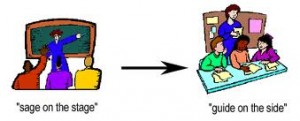
This story also highlights the role of a teacher in a Montessori classroom as being a “guide on the side” rather than the “sage on the stage.”

(can you believe that I found this on the internet? source)

Tuesday, March 1, 2011

Basics of APA Style (470)

1947 ContinentalImage by Olivander via Flickr
I know everyone in class said they know APA formatting but here is a guide (albeit a beginner's one) that can serve as a reminder. You can fast forward through sections that you already know and listen and read to the parts that you didn't know yet.

Via the APA:The Basics of APA Style
Enhanced by Zemanta

Sunday, February 27, 2011

Sports Too Much Too Soon Too Much$? (470)


Is spending $5000 a year on gymnastics events, training and uniforms too much for young children? According to this piece the Sam (11 year old) practices 12 hours a week as part of The Ohio State University kids club.

Discussion Questions:

  1. Is spending 12 hours a week too much for an eleven year old?
  2. Are we putting too much emphasis on competitions?
  3. What about the sacrifices families need to make in order to accommodate sporting pursuits?  Do all of their children get the same amount of time, $ and parental involvement? 
  4. How much money did your parents spend on you to get you to a "higher" level?

Thursday, February 24, 2011

Athlete-Student or Student-Athlete? (470)

NCAA Headquarters and Hall of ChampionsImage by Intiaz Rahim via FlickrMore Athlete Than Student: "
by Stuart Singer, The Teacher Leader

College athletes serve as role models for many high school students. Recent trends in NCAA eligibility and university attitudes raise concerns about the educational behaviors being modeled.
In his State of the Union Address, President Obama received a standing ovation when he said there should be more prestige in winning the science fair than the super bowl. Currently in this country that is clearly not the case. His sentiment is particularly relevant for high school educators in light of recent trends in athletics at universities. College athletes can be powerful role models for many high school students. In the past when these collegians demonstrated on a regular basis that sports could be a path to a college degree such adulation was a positive force. Unfortunately, the current environment on many college campuses is not sending the same message and has a potentially negative impact on education.
-A reasonable solution
-A turn in the wrong direction
-What can high school educators do?

Points to Ponder (P2P)
  1. What is the role of interscholastic sports at the K-12 level?
  2. Does the school you want to teach at have an athletics policy online?  If so, please review it and link your readers to it.  
  3. What is your schools's athletics policy? Is it standardized across all sports? Do certain teams/sports/coaches receive preferential treatment?
  4. What is your coaching philosophy with regards to academics? Do you have it in writing yet? If not, why?
Click here to read the rest of Stuart Singer article More Athlete Than Student:
Enhanced by Zemanta